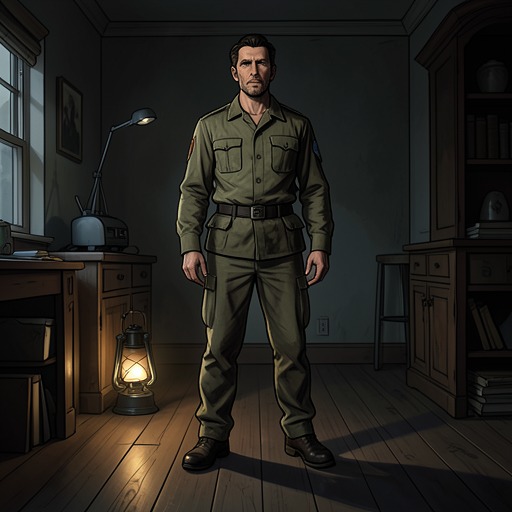
Korea
The Narrow Road to the Deep NorthKorea enters the novel chiefly through Choi Sang-min’s recollections, not through an extended description of the country. His memories make it the beginning of a life shaped by Japanese-language schooling, economic hardship, and colonial hierarchies. By the time he reaches the POW camp, he has accumulated several names and roles, yet cannot find a secure identity among them.
Childhood and Education
Choi’s father was a peasant who wanted him to receive an education. Choi attended elementary school for three years, learning Japanese myths and history, before leaving school to work for a Korean family. He remembered being reprimanded in class for whispering in Korean instead of speaking Japanese, and standing at the back of the room. The episode brings the pressures of language and authority into an ordinary childhood setting: even the language in which he spoke marked him as out of place.
At eight, Choi began working as a servant for a Korean family, receiving board, a small monthly wage, and regular beatings. At twelve, he entered the service of a Japanese family, where his pay was higher but he remained subject to harsh treatment. His recollections connect the loss of schooling not to a chosen path but to poverty and limited prospects. Korea is therefore present as both home and the first place where social position circumscribed his choices.
From Korea to Pusan
At fifteen, Choi heard that the Japanese were recruiting guards for POW camps elsewhere in the empire. The promised wage of fifty yen a month drew him to the work. His thirteen-year-old sister also enlisted, going to Manchukuo as a comfort woman for similar pay; she told him she would help soldiers in hospitals. Unable to read or write, she never contacted him again. Later, once he understood what her assignment involved, Choi tried not to think about her and hoped she was dead. Her disappearance remains an unresolved family loss in his memories of the choices poverty had made seem possible.
In Pusan, Choi was given the Japanese name Akira Sanya and trained as a soldier. He recalled repeated punishment for his speech and posture, including being disciplined for being too Korean. He understood that the training was intended to make him a strong Japanese soldier, but he did not believe he could become one; his actual role would be that of a guard over men treated as less than men for having surrendered. Pusan thus marks a further stage in the transformation of a Korean child into an imperial military subordinate, without resolving the difference between the identity imposed on him and the one he could claim.
Korea and Choi’s Divided Identity
By the time Choi faces execution, the names attached to him have come to stand for incompatible positions: Choi Sang-min, his Korean name; Akira Sanya, the Japanese name he had to answer to in Pusan; and the Goanna, the name used by Australian guards. He recognizes that he is neither Korean nor Japanese in the uncomplicated national terms invoked by others, but a man of a colony. Korea remains part of his history, yet it does not supply him with an identity that can withstand the pressures of military service, colonial hierarchy, and captivity.
The novel’s treatment of Korea is consequently concentrated in personal memory rather than landscape or national history. The classroom, the successive places of service, and the names Choi is made to bear trace how power enters daily life and shapes the available forms of belonging. His recollections do not resolve that divided identity: as he waits on death row, he still longs for an idea of his own, but none comes.